If you’re weighing dental implants, one of the first things you want to know is simple: how long do dental implants last, and is this really a once-and-done fix? It’s the right question to ask about an investment in your smile. The short version is reassuring — with good care, implants are built to last a very long time — but the honest, useful version has a little more to it. As a family practice that has cared for our neighbors in Manassas and Dumfries for years, we’d rather give you the full picture than a slogan. So here’s what actually determines how long an implant lasts, and the handful of habits that protect yours.
How long do dental implants last?
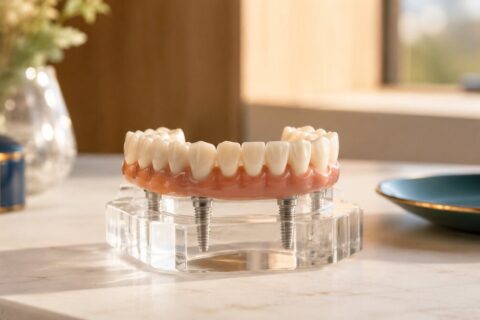
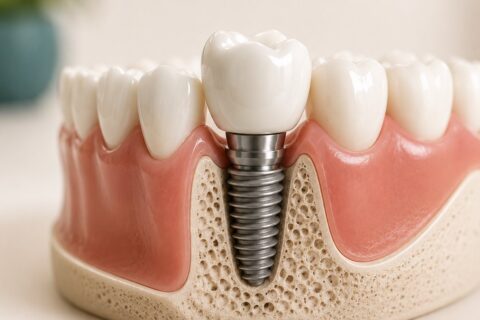
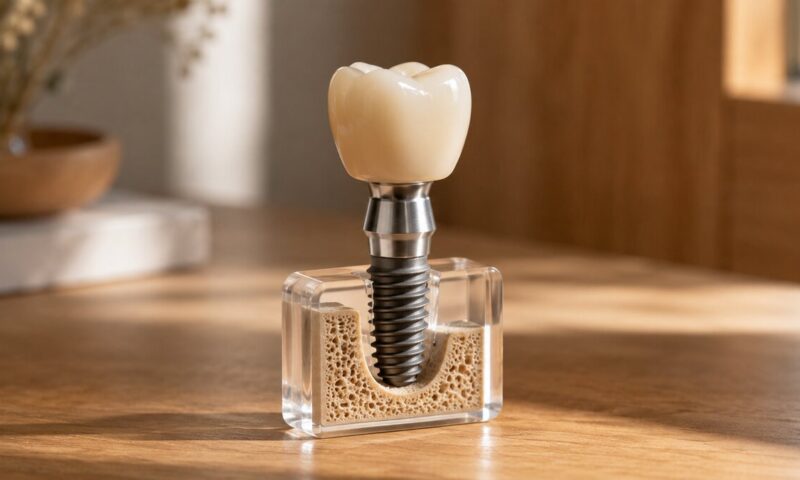
With good care, dental implants can last decades — and for many people, the implant itself lasts a lifetime. It helps to think of an implant as two parts. The implant post — the titanium screw that fuses with your jawbone — is the part designed to be permanent. The crown on top (the visible tooth) takes the daily wear of chewing, so it may need replacing at some point long after the post is placed, the same way a natural tooth can need a new filling or crown over a lifetime. So “how long do implants last” really has two answers: the foundation is built to stay, and the tooth on top is serviceable if it ever needs attention.
What makes that longevity possible is a biological process called osseointegration, where the jawbone actually grows around the implant and holds it in place — the ADA’s MouthHealthy patient guide describes it well. Once that bond forms, the implant behaves like a stable root. Keeping it that way is mostly in your hands.
It’s worth putting that in perspective. Very few things we place in the body are meant to last as long as a dental implant, and the reason is that an implant works with your biology rather than against it — the bone treats it as part of you. That’s also why the lifespans you’ll read about online vary so much. An implant’s longevity is far less about the hardware and far more about the mouth it lives in and the care it gets. Two people can receive identical implants and see very different long-term results based on their habits alone — which is genuinely good news, because it means a lot of this is within your control.
What affects dental implant lifespan
Implants are reliable, but they aren’t invincible — and what shortens their life is rarely the implant itself. It’s usually the health of the gum and bone around it. Here’s the encouraging part: almost every one of these is something you have a say in. An implant doesn’t wear out on a timer — it responds to its environment. Keep that environment healthy and it tends to keep doing its job quietly for years; let inflammation build up around it and even a perfectly placed implant can loosen over time. The main factors that affect dental implant lifespan:
- Daily hygiene — plaque around an implant can inflame the gum and bone that anchor it, just as it does around natural teeth.
- Gum and bone health — implants rely on healthy tissue and bone; gum disease is the most common threat to a long-lasting implant.
- Grinding and clenching — heavy, repeated bite forces stress the crown and the post over time; a night guard often protects both.
- Smoking and general health — smoking and uncontrolled conditions like diabetes slow healing and raise the risk of problems around the implant.
- Regular professional care — implants that are checked and cleaned on schedule simply last longer, because small problems get caught early.
Caring for your dental implants day to day
The good news is that caring for an implant looks a lot like caring for the rest of your mouth. Brush twice a day and clean between your teeth, paying attention to the gumline around the implant where plaque likes to gather. If you grind your teeth at night, ask us about a night guard — it’s one of the simplest ways to add years of life to both the crown and the post. And treat your implant like a natural tooth in one more way: don’t use it to open packaging or crack ice. Good day-to-day habits are the single biggest thing that decides how long your implant lasts.
One small habit makes an outsized difference: cleaning the spot where the crown meets the gum. That junction is where plaque tends to collect and where trouble usually starts, and a regular toothbrush doesn’t always reach it well. Depending on your implant, we might suggest interdental brushes, a water flosser, or a particular flossing technique — small tools that take a few extra seconds and protect years of function. We’ll show you exactly what works for your setup so it becomes second nature.
Warning signs to watch for
A healthy implant should feel like a natural tooth and cause you no trouble at all. A few changes are worth a call to us rather than a wait-and-see:
- Any looseness or a feeling that the tooth moves.
- Red, swollen, or bleeding gums around the implant — an early sign of inflammation known as peri-implantitis, which is very manageable when caught early.
- Discomfort or tenderness when you bite or brush there.
- Gum receding around the implant.
None of these means you’ll lose the implant — they mean it’s time to have us take a look, because the earlier we address inflammation around an implant, the easier it is to protect. If you had an implant recently and you’re wondering what’s normal during healing versus what isn’t, our guide to dental implant recovery walks through the timeline.
How regular visits protect your implants
Most of what protects an implant for the long term happens at routine visits. We clean around the implant where a brush can’t fully reach, check that the crown and bite are wearing evenly, and watch the gum and bone for the earliest signs of trouble — a little bleeding, a slightly deeper pocket — long before you would feel anything yourself. Caught at that stage, inflammation around an implant usually means a simple cleaning and a tune-up of your home routine rather than a procedure. It’s the same preventive rhythm that protects your natural teeth — which is exactly why implant care folds right into the routine preventive care your whole family already comes in for. Keeping the tissue around your implants healthy also supports your broader health, since gum inflammation is linked in research to overall inflammatory health. If bone support was ever a question for your implant, our overview of bone grafting for dental implants explains how that foundation is built and maintained.
“I’ve watched patients keep the same implants for decades — people who came to us when they first opened, and who still have that implant working exactly as it should. What they have in common isn’t luck. It’s that they kept up their cleanings and treated the implant like the natural tooth it replaced.”
— Dr. Naseer A. Naeem, Naeem Family Dentistry
Talk to us about your implants
Whether you’re considering an implant or you already have one and want to keep it healthy, we’re glad to help you plan for the long term. Come in and let’s look at your specific situation. Request an appointment at our Manassas or Dumfries office and we’ll take it from there.
Frequently asked questions
The implant post — the part that fuses with your jawbone — is designed to be permanent and often lasts a lifetime. The crown on top handles daily chewing, so it may eventually need replacing, much like a natural tooth can need a new crown over the years.
It's rarely the implant itself. The most common threat is inflammation of the gum and bone around it — driven by plaque, gum disease, or smoking. Good hygiene and regular checkups prevent the great majority of problems.
Brush and clean between your teeth daily with attention to the gumline around the implant, wear a night guard if you grind, avoid smoking, and keep your regular professional cleanings so problems are caught early.
Care is similar to a natural tooth, with extra attention to the gumline where the crown meets the gum. We'll show you the best technique and any tools that help at your visit.